
The $22 Billion Voice AI CEO Just Revealed What’s Coming Next
The ElevenLabs CEO sat down for a wide-ranging conversation covering everything from gross margins to IPO timing, offering rare insight into one of AI’s fastest-growing companies. ElevenLabs builds the voice layer of AI, models that turn text into speech sounding genuinely human, and most people encounter it during customer service calls, often without realizing it. Klarna runs first-line phone support for 35 million US customers on the technology, alongside Deutsche Telekom, Cisco, Adobe, and a growing list of governments.
The company isn’t alone in this space, and increasingly bumps into its own customers turned competitors, including Decagon, a conversational AI platform that trained its voice product on ElevenLabs and now competes directly with it. Investors don’t seem particularly concerned. ElevenLabs, pacing at $600 million in annual recurring revenue, is reportedly valued at $22 billion by its backers, despite being just four years old.
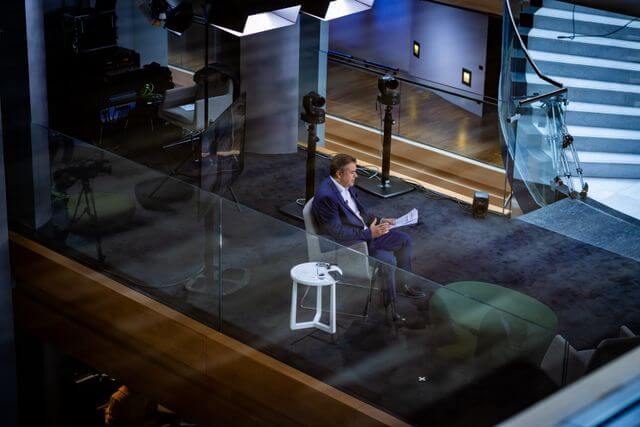
TechCrunch interviewed ElevenLabs co-founder and CEO Mati Staniszewski at the Nrth entrepreneurship conference in Toronto, covering whether businesses should disclose AI conversations to customers and the company’s gross margins. Unsurprisingly, Staniszewski couldn’t discuss margins in detail, but was clear he doesn’t mind them shrinking further if it means expanding market share.
Has Audio AI Become Commoditized Yet? Insights from ElevenLabs CEO
Asked to revisit a prediction he made last year at TechCrunch Disrupt, that audio models would become commoditized within a couple of years, Staniszewski acknowledged meaningful quality gaps still exist at the model level. “If we think longer term, probably three, five years from now, those differences will be smaller,” he said. His bigger ambition is passing the Turing test for conversational AI specifically, combining raw intelligence with genuine emotional intelligence, understanding and responding to a speaker’s emotional state. “That hasn’t yet been done,” he said.
Where ElevenLabs’ Revenue Actually Comes From
The ElevenLabs CEO revealed that enterprise customers now make up the majority of the business. “We are now $600 million in ARR. Fifty-five percent plus is classic enterprise, and a big percentage of the remaining 45% are small and medium businesses, developers, builders, creators,” Staniszewski said.
Competing Directly With Its Own Customers
Asked about competing increasingly with customers like Decagon, which trained its voice product using ElevenLabs technology, Staniszewski acknowledged the industry’s shifting boundaries. “The lines become more blurry. As we think about model companies, platform companies, application companies, in the past you’d have very clear splits where one starts and ends. Today that line is much more blurry,” he said, pointing to Anthropic as another example of a former model company evolving into both a platform and a broader application ecosystem.
Choosing Between Frontier and Open-Weight Models
ElevenLabs lets customers select their preferred “reasoning layer” from a menu of options. Staniszewski explained the choice isn’t strictly binary. For simple informational customer service, open-source models often work fine since a company’s own knowledge base defines a good experience. But for higher-stakes use cases like financial services, requiring authentication and error-free handling of transactions or refunds, frontier models remain essential.
Some open-weight models available through the platform are Chinese-developed, notable given that both the US government and various European governments are ElevenLabs customers. Staniszewski said each government deployment involves different model choices based on specific requirements, citing a Polish government healthcare deployment where AI agents call patients to remind them of appointments, addressing an 18% no-show rate, all while maintaining strict data residency requirements.
Should Companies Tell You You’re Talking to a Bot?
On whether businesses should disclose when customers are speaking with an AI agent rather than a human, Staniszewski was direct. “I think there should be disclosure at this time,” he said, noting that people currently don’t want to feel deceived during a call. He predicted that dynamic will shift within five years, once everyone has their own personal AI agent and expects to interact with one by default. In practice, he said, offering customers a choice between waiting for a human or speaking with an agent immediately usually results in customers choosing the agent, then being pleasantly surprised by the quality of the experience.
The Margins Question He Wouldn’t Fully Answer
Pressed on gross margins given the company’s model and inference costs, Staniszewski gave what he openly called a vague answer, explaining that ElevenLabs’ research capabilities allow smart fine-tuning and constraint of models. “If we can invest and prove that value, we don’t mind the margins going lower to actually benefit together as the value gets created in the next five years,” he said, prioritizing proven customer value over near-term profitability.
How ElevenLabs Actually Trains Its Models
Regarding the millions of hours of customer service calls flowing through its platform, Staniszewski said training data volume matters less than annotation quality. The company employs thousands of contracted annotators tracking not just what was said, but timing, delivery, and emotional tone, even bringing in voice coaches specifically to accurately detect accents.
ElevenLabs CEO on IPO Timing and Broader AI Safety Questions
Asked to confirm reports pointing toward a possible 2028 IPO, Staniszewski remained deliberately noncommittal. “We’d love to create a company that stands the test of time. We are preparing the foundation to be able to do it in the next years. But whether we do it will depend on the time and place,” he said.
On whether frontier AI labs should slow development, the ElevenLabs CEO expressed general alignment around finding an appropriate pace, while noting his company doesn’t train the core text and intelligence models central to that broader debate.
Asked whether ElevenLabs could face a security incident similar to what happened at Hugging Face, Staniszewski expressed confidence in the company’s safeguards. “We’re a step further, because we don’t deploy self-replicating or recurrent parts of the intelligence of agents,” he said, noting that every customer goes through identity verification and that cybersecurity remains a genuine industry-wide risk the company actively works to mitigate.