
DeepSeek vs Perplexity: Best Ultimate AI Comparison (2026)
Artificial intelligence has evolved past basic conversational tools into highly specialized reasoning engines and dynamic real-time answer systems, bringing DeepSeek vs Perplexity to the forefront of modern AI discussions. While general-purpose LLMs still dominate basic query tasks, power users, software engineers, data analysts, and researchers now demand extreme precision, live source verification, and low-latency complex problem solving.
If you are evaluating which tool deserves a spot in your daily tech stack, this ultimate side-by-side guide explores the architectural strengths, pricing structures, practical workflows, pros, and cons of DeepSeek vs Perplexity in 2026.
Understanding DeepSeek: The Open-Weights Reasoning Engine
DeepSeek has established itself as an engineering powerhouse designed specifically for raw logic, mathematical proofs, and full-stack code generation. Rather than operating purely as a search interface, it focuses on deep structural processing and autonomous chain-of-thought verification.
Core Strengths of DeepSeek
- Architectural Efficiency: Built with high performance per parameter, ensuring low latency even during complex multi-step execution.
- Superior Coding Capabilities: Handles structural debugging, algorithmic optimizations, and multi-language software architecture better than most commercial chat interfaces.
- Open-Source & Developer-Friendly: Highly flexible for teams looking to integrate deep reasoning directly into custom software pipelines via API.
- Low Hallucination Index: Employs rigorous internal validation steps to minimize logical errors in quantitative, financial, and scientific domains.
Understanding Perplexity: The Next-Gen Search Engine
Perplexity AI approaches artificial intelligence from an entirely different angle: replacing traditional search engines with direct, verified knowledge synthesis. Instead of requiring users to click through dozens of blue links, Perplexity browses the live web and generates clean, structured summaries accompanied by inline academic and web citations.
Core Strengths of Perplexity
- Real-Time Web Indexing: Fetches live data, trending news, financial updates, and recent publications in seconds.
- Transparent Citations: Every sentence backed by factual claims includes direct links to primary sources, preventing misinformation.
- Multi-LLM Engine Switcher: Allows Pro users to toggle between top foundational models including Claude, GPT, and custom internal systems within a unified workspace.
- Interactive Collections & Space Sharing: Built for researchers to organize files, PDFs, and search threads into shared knowledge hubs.
DeepSeek vs Perplexity: In-Depth Architectural Comparison
To understand where each platform shines, we need to look at how they process requests under the hood:
1. Research & Search Capabilities
Perplexity is fundamentally a retrieval-augmented generation (RAG) system. It excels when you need current information, market trends, or cross-referenced background research from reliable web domains. DeepSeek, on the other hand, relies primarily on its internal reasoning weights; it performs best when given dense static data, raw code blocks, or logic puzzles rather than live news queries.
2. Coding, Math, and Logical Reasoning
When it comes to pure problem-solving, DeepSeek takes a clear lead. It can analyze long blocks of complex code, spot subtle memory leaks, refactor legacy scripts, and solve multi-step mathematical theorems with high precision. Perplexity can generate basic scripts and explain technical concepts, but it is not optimized for heavy software engineering workflows.
3. User Experience & Document Processing
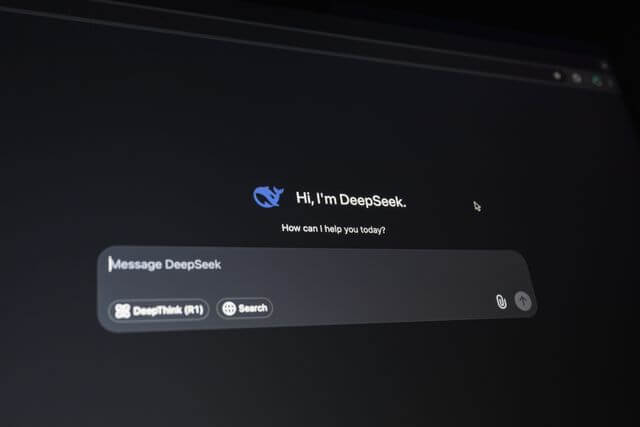
Perplexity offers a consumer-grade dashboard featuring PDF uploads, file parsing, image generation, and custom collection organization. DeepSeek maintains a streamlined, minimal interface prioritize-built for speed and raw text/code output.
DeepSeek vs Perplexity: Pricing Breakdown
Understanding the cost structure is crucial for both individual power users and enterprise teams evaluating long-term ROI:
| Feature / Metric | DeepSeek | Perplexity AI |
|---|---|---|
| Free Access | Free web interface with high rate limits | Basic web search with daily Pro queries |
| Pro Subscription | Pay-as-you-go API (Extremely cost-effective) | $20 / month (Perplexity Pro) |
| Primary Focus | Deep logic, coding, and API builds | Live search, PDF analysis, & citations |
| Model Selection | Proprietary open-weights models | Switch between GPT, Claude, & internal LLMs |
| Ideal User | Developers, engineers, & data scientists | Students, journalists, & web researchers |
Pros and Cons Breakdown
DeepSeek
- Pros:
- Exceptional performance in software development, algorithm design, and math.
- Unbeatable cost-to-performance ratio for API users.
- Reduced logical hallucinations compared to standard conversational models.
- Cons:
- Lacks native real-time web search capabilities in basic modes.
- UI is minimalist and less focused on non-technical document management.
Perplexity AI
- Pros:
- Replaces traditional search engines with fast, cited answers.
- Seamless document and long PDF analysis capabilities.
- Flexibility to use multiple AI models under a single $20 subscription.
- Cons:
- Pro subscription can feel expensive for casual users.
- Output accuracy depends heavily on the quality of indexing web sources.
Final Verdict: Which Tool Belongs in Your Workflow?
When choosing between DeepSeek vs Perplexity, the right choice depends on your daily operational needs:
- Choose DeepSeek if: You are a programmer, computer scientist, or quantitative researcher who needs high-level logical reasoning, deep code debugging, and low-cost execution.
- Choose Perplexity if: You are an analyst, content strategist, student, or executive who requires live web search, verified source citations, and real-time document research.